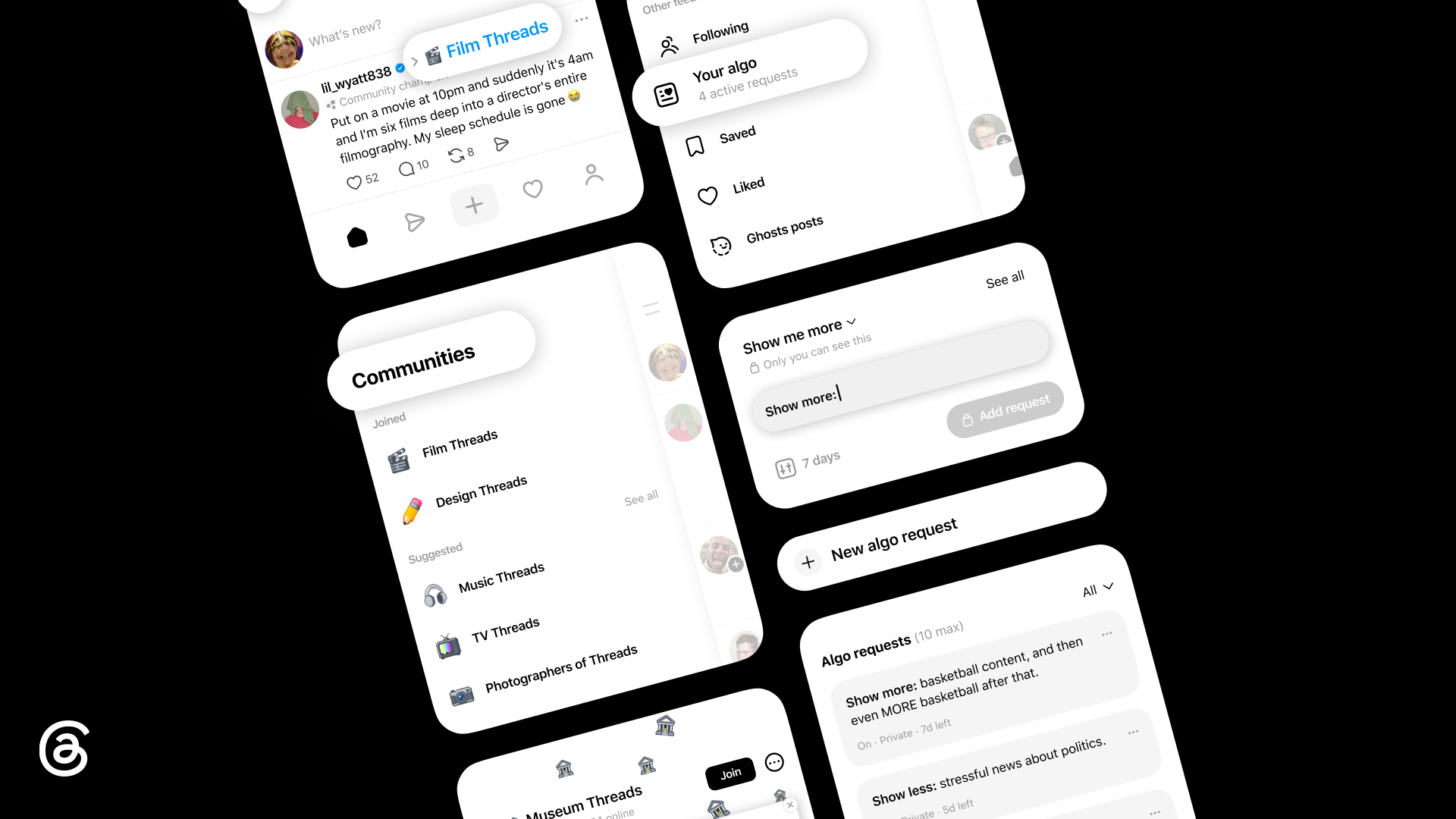
Threads ads no longer require an Instagram account. In a pair of updates published on September 21 and 22, 2026, Meta confirmed that businesses can now run Threads ads directly from a native Threads profile, that usernames no longer need to match across the two apps, and that Threads profiles are getting their own task-based access controls inside Meta's business portfolio tools. MediaPost reports the identity changes take effect for advertisers on September 26. Meta says the rollout is gradual and not yet live in every region.
The short version: Threads is becoming its own ad platform rather than an Instagram add-on. For brands, that means Threads now deserves its own identity, its own creative, its own team permissions and its own measurement plan. Treating it as a place to recycle Instagram assets will waste the one real advantage it offers, which is access to roughly 500 million monthly users who behave very differently from the people scrolling Reels.
Below, we break down exactly what changed, why Meta is doing it now, and how hospitality, wellness, lifestyle and tech brands should approach Threads advertising over the next two quarters.
What changed with Threads ads in September 2026?
Three separate changes landed within about 48 hours of each other. Each one is small on its own. Together they amount to Meta formally untethering Threads from Instagram on the business side.
1. You no longer need an Instagram account to advertise on Threads
Until now, running a Threads ad meant maintaining an Instagram identity and carrying it over to Threads. Meta's updated guidance, quoted by Social Media Today, states that businesses "operating without an Instagram profile will also be able to launch ads on Threads directly using their native Threads profile." A B2B software company, a text-first media brand or a founder-led consultancy that never invested in Instagram can now buy Threads inventory without building a visual feed it does not need.
2. Your Threads and Instagram usernames can be different
Matching usernames are no longer required to run Threads ads. For brands that maintain both accounts, this opens the door to a Threads handle that fits the platform's conversational tone. A hotel group might keep its property name on Instagram and run a founder- or concierge-led voice on Threads. A wellness brand could separate its product account from an expert-led education account.
3. Threads gets its own business permissions
Threads profiles now carry dedicated, task-based access within a Meta business portfolio. Existing profiles initially inherit whatever access their linked Instagram account had, and businesses can then customize from there. Meta's access levels include partial access for content or ads and full access. People with ads access can create, manage and delete Threads ads, moderate comments on those ads, and view performance data for the account, its content and its advertising.
In practice, this is the most operationally important change of the three. It lets a brand hand Threads to a specific community manager, agency or in-house writer without also handing them the keys to Instagram.
Why is Meta separating Threads from Instagram now?
Scale is the obvious answer. Threads launched in July 2023 and, as MediaPost notes, collected 100 million sign-ups in five days, largely because Meta let Instagram's user base port their profiles over with one tap. That shortcut worked for growth, but it also meant most Threads accounts were mirror images of Instagram accounts, and advertisers were locked into the same identity on both.
Three years later, Threads has around 500 million monthly active users, and Mark Zuckerberg has said the app has likely passed X in overall usage. At that size, borrowing Instagram's identity layer becomes a constraint rather than a benefit. Meta has already been chipping away at the link, for example by removing Instagram's social graph from Threads onboarding. Letting the ad business stand alone is the logical next step.
There is also a revenue logic. Meta has every reason to build a second high-volume feed where it can sell attention, particularly as advertisers show signs of saturation elsewhere in the Meta ecosystem.
Is Threads advertising worth it for brands in 2026?
For many brands, yes, but for different reasons than Instagram. The case for testing Threads ads now rests on cost and audience rather than on format.
Meta costs are climbing while returns soften
The most useful context comes from Metricool's 2026 Social Ads Report, released September 21, which analyzed 628,969 campaigns from 44,355 advertisers and more than $471 million in spend. Metricool found that average spend per Meta campaign rose 47% year over year, from $489.53 to $718.45, while return on ad spend for Meta Sales campaigns fell from 5.48x in 2025 to 4.57x in 2026. The same report found that 91% of advertisers in the study run paid campaigns exclusively on Meta.
That combination (heavier spend, lower returns, and almost everyone crowded into the same auctions) is exactly the environment where a newer, less contested placement can outperform. Threads inventory is still maturing, which typically means less competition for the same eyeballs. Brands that learn the platform while it is under-bought usually pay less for that education than brands that arrive once it is crowded.
The audience is not simply "Instagram again"
People go to Instagram to look. They go to Threads to read, reply and argue. As Social Media Today's Andrew Hutchinson put it, the way most people use Threads "is very different to how they approach Instagram." Content that performs there tends to be opinion-led, timely and text-forward. For brands with a genuine point of view, including chefs, hoteliers, wellness practitioners and founders, that is an advantage. For brands whose entire social presence is polished product photography, it is a creative gap that needs closing before any money is spent.
This mirrors what we have seen across the attention economy more broadly. As we covered when a new report showed social media now beats TV for American attention, the platforms that win time are the ones where people feel like participants. Threads is built around participation.
How should brands set up Threads ads under the new rules?
The new flexibility is only valuable if you use it deliberately. Here is how we would approach it for a client this quarter.
Decide whether Threads gets its own identity
Start with a simple question: should your Threads presence sound like your Instagram presence? For most lifestyle and hospitality brands, the honest answer is no. Instagram is your visual storefront. Threads is closer to a front desk conversation. Consider whether a distinct name or a person-led account (a founder, an executive chef, a head of wellness programming) would earn more trust in a text-first feed. If you do split the identities, keep the brand connection obvious in the bio and profile image so users are not confused about who they are talking to.
Audit and reassign permissions now
Because existing Threads profiles inherit Instagram permissions at first, anyone who currently has broad Instagram access likely has the same reach on Threads today. Use the new controls to tighten that. Give ads access only to the people or agency running paid campaigns, and content access to whoever owns day-to-day posting and replies. This is basic hygiene, and it also makes accountability clearer when performance reviews come around.
Build Threads-native creative instead of cropping Reels
The fastest way to underperform on Threads is to run Instagram creative there. Test formats that match how people actually use the feed:
- A sharp opinion or observation in the first line, with the image or video as support rather than the headline.
- Behind-the-scenes explanations, such as why a restaurant changed its menu, how a spa sources its botanicals, or what a hotel learned from guest feedback.
- Questions that invite replies, since Threads rewards conversation and your ad comments are now something your team can actively moderate and answer.
- Timely commentary tied to cultural moments, events or industry news your audience already cares about.
If your team already struggles to produce enough authentic, voice-driven content, this is where internal voices help. We made the case for why employee-generated content often beats influencer marketing, and Threads may be the best home yet for that kind of content.
Set up measurement before you scale
Threads is a newer placement, so you will not have years of benchmarks to lean on. Define success before launch: cost per engaged reply, profile visits, click-through to a booking or product page, and, where possible, incrementality against your Instagram and Facebook spend. The goal is to learn whether Threads is adding new customers or simply re-reaching people you already paid to reach elsewhere. Our breakdown of Snapchat's unified attribution rollout covers why cross-platform attribution matters more as budgets spread across more feeds.
What does the Threads change mean for specific industries?
Hospitality
Hotels and restaurants have always had stories that do not fit in a square photo: the chef's reasoning behind a tasting menu, the history of a building, the small operational decisions that make a stay feel personal. Threads rewards that kind of narrative. A property could run a concierge-voiced Threads account promoting seasonal packages through short, useful posts ("Three things we would do in the city this weekend if we were not working") with a paid boost behind the best performers. Because usernames can now differ, that voice does not need to wear the formal property handle.
Wellness
Wellness is a trust category, and trust on Threads comes from expertise delivered in plain language. Studio owners, practitioners and product founders who explain the "why" behind a modality or ingredient tend to outperform generic promotional copy. The new permissions matter here too. Many wellness brands work with outside practitioners or contractors who contribute content; giving them Threads-only content access, without exposing Instagram or ad accounts, is now straightforward.
Lifestyle and consumer brands
For fashion, home and lifestyle brands, Threads is a place to show taste and personality between product drops. Think commentary on trends, answers to customer questions and candid updates about what the team is working on. Ads that feel like a continuation of that conversation will blend in. Ads that look like a catalog will be scrolled past.
Tech and B2B
This is the segment that benefits most from dropping the Instagram requirement. Plenty of software companies, agencies and professional services firms never built a meaningful Instagram presence because their audience was not there. They can now go straight to Threads, where text-based thought leadership is native and where, according to Zuckerberg, usage may already exceed X's.
What should brands watch out for?
Independence brings new responsibilities, and a few risks are worth naming plainly.
- Rollout is uneven. Meta says both the ad identity change and the new permissions are rolling out gradually and are not available in all regions. Confirm availability in your own business portfolio before building a launch plan around a specific date.
- Brand consistency can slip. Separate handles and separate teams can drift into separate brands. Write a short Threads voice guide that sits under your master brand guidelines.
- Moderation is now your job. Ads that invite conversation will get it, including criticism. Staff your comment moderation before you boost anything provocative.
- Algorithm dependency has not gone away. Threads still draws on Instagram engagement signals when predicting user interest, according to Social Media Today. The organic reach dynamics we discussed in our piece on why Instagram's algorithm controls changed little for brand reach apply here as well: paid support and genuinely engaging content will matter more than posting volume.
Frequently asked questions about Threads ads
Do I need an Instagram account to run ads on Threads?
No. Starting in September 2026, Meta allows businesses to launch Threads ads directly from a native Threads profile without an Instagram account. The change is rolling out gradually, so availability may vary by region.
Can my Threads username be different from my Instagram username?
Yes. Meta no longer requires matching usernames between Threads and Instagram to run Threads ads, so brands can use a Threads-specific name that suits the platform's conversational style.
How do I control who manages my brand's Threads account?
Threads profiles now have their own task-based access in Meta's business portfolio, with partial access for content or ads and full access options. Existing profiles start with the permissions inherited from their linked Instagram account, which you can then customize.
How many people use Threads in 2026?
Threads has reached roughly 500 million monthly active users, according to figures reported by Social Media Today and MediaPost, and Meta CEO Mark Zuckerberg has said the app has likely passed X in overall usage.
The bottom line
Meta's decision to separate Threads ads from Instagram is a small product update with a big strategic signal: Threads is now a standalone channel, and it should be planned like one. The brands that benefit will be the ones that give it a distinct voice, clear ownership, native creative and honest measurement, rather than an overflow bin for Instagram content. With Meta auction costs rising and most advertisers still concentrated in the same placements, a thoughtful early test is a low-risk way to find new attention.
One Media Society is a Miami-based marketing agency that helps hospitality, wellness and lifestyle brands build social and paid media programs across every major platform, including newer channels like Threads. If you want help deciding whether Threads belongs in your mix and how to set it up properly, explore our social media and paid media services or, for founder-led brands that need strategic direction more than execution, take a look at The Advisory.