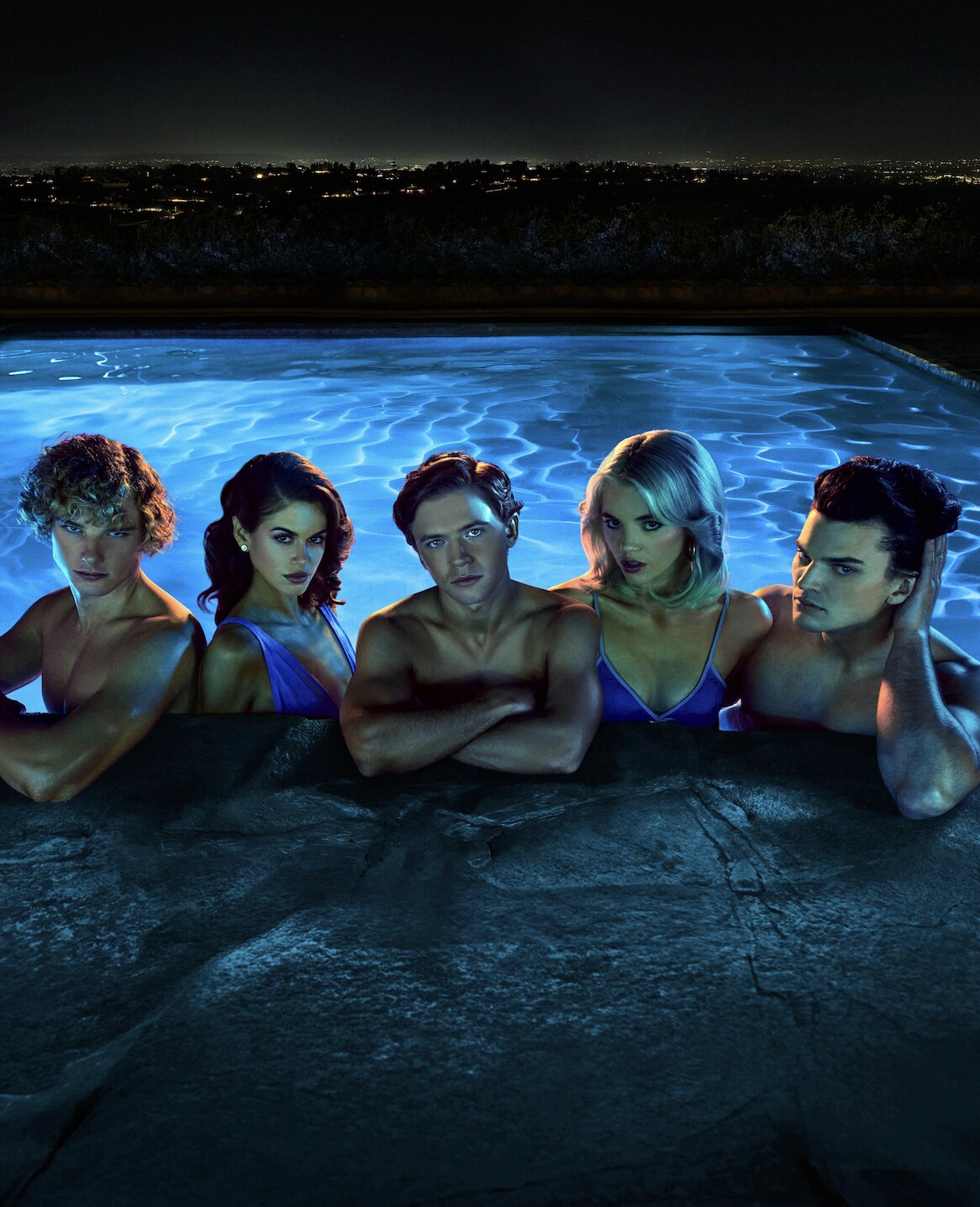
Days before "The Shards" premiered on FX and Hulu on August 5, 2026, the network didn't build a set to promote it. It borrowed a real one. For one weekend, FX transformed Los Angeles' Sherman Oaks Galleria, the actual "Valley Girl"-era mall woven into Ryan Murphy's new series based on Bret Easton Ellis' novel, into a fully immersive 1980s nostalgia marketing brand activation, complete with retro brand collaborations, arcade games, custom merch and complimentary soft serve. The lesson for hospitality, wellness and lifestyle marketers isn't "throw a themed party." It's that a location's own cultural memory can do more marketing work than anything built from scratch, if the activation gives people something to actually do inside it, not just something to look at.
What Did FX Actually Build at the Sherman Oaks Galleria?
For anyone who grew up around Los Angeles in the 1980s, the Sherman Oaks Galleria wasn't just a mall. It was the mall, the physical center of the era's "Valley Girl" culture and a location the city still recognizes on sight. That real history is exactly why FX picked it as the stage for The Shards rather than dressing up a generic soundstage to look like the decade.
Experiential agency Creative Riff built the two-day takeover, with PR handled by CIVIC. "The Sherman Oaks Galleria is an iconic '80s location that is featured in the series," FX senior vice president of integrated promotions and multi-platform marketing Kenya Hardaway told BizBash. "It was the most authentic setting we could recreate to bring the world of The Shards to life for audiences today."
Rather than papering the mall in show signage, the team rebuilt the mechanics of an actual 1980s Saturday. Licorice Pizza ran a record-store Listening Station powered by RadioShack. Maybelline hosted a Fit Me Matching Kiosk. Another station heat-pressed custom T-shirts on site. Guests played retro arcade games, posed in a photo booth, ate complimentary nostalgic soft-serve flavors from Creamy Boys Ice Cream, and caught a sneak peek of the show inside an '80s movie theater pop-up. A 21+ VIP night closed the weekend out with product giveaways, merch customization and an '80s DJ set from Ana Calderon.
"This event set out to immerse attendees in the '80s fashion, trends, and aesthetic that are integral to both the novel and the series, while leaning into key elements of the decade, like mall culture and third spaces, that resonate with consumers today," Hardaway explained. Every brand partner, old and new, got a throwback treatment tied to its own original 1980s look, so the collaborations read as a genuine time capsule rather than a logo wall with a theme slapped on top.
The stakes behind the spectacle are real. The Shards follows a group of privileged high school seniors at an elite prep school whose world of wealth, beauty and excess turns sinister with the arrival of a mysterious new student and a serial killer targeting teenagers across the city. Staging the takeover days before the August 5 premiere gave FX a way to put the show's mood in front of an audience before a single episode aired, using a real place instead of a trailer to do it.
Why Does Nostalgia Marketing Actually Work? The Data Behind the Instinct
Fandom Is Identity, Not Just Interest
It's easy to wave off a mall takeover as a nice stunt for a streaming premiere. The research on fan behavior suggests something more specific is happening. In Anatomy of Hype, Amazon Ads' global research into fandom and fan engagement, 64% of self-identified fans agreed that being a fan is a defining part of their identity, not simply an interest they follow casually. A nostalgia marketing activation like this one works because it treats a person's relationship to an era, a story or a place as identity, then builds something they can physically step inside rather than just scroll past.
Live Experience Still Outperforms a Feed for Purchase Intent
The broader event marketing numbers back the same pattern. EventTrack 2026, the annual benchmark study produced by Event Marketer in partnership with Sparks, surveyed more than 1,000 Fortune 1000 marketers and event attendees and found that 61% of consumers are more inclined to purchase after attending a live event, while 57% of B2C and B2B organizations plan to increase their event investment this year. Brands are backing physical experience with real budget because it converts attention into intent in a way a feed rarely manages on its own.
The Nostalgia Marketing Playbook Other Brands Can Borrow From The Shards
Few hospitality, wellness or lifestyle brands have a studio's licensing budget or a Sherman Oaks Galleria sitting around. But the underlying decisions behind the activation scale down cleanly to a boutique hotel opening, a wellness studio anniversary or a restaurant's regional expansion.
Use a Real Location's Story Instead of Inventing One
FX didn't need to build 1980s nostalgia from scratch because the Galleria already carried it. Most brands are sitting on a smaller version of the same asset: an original building, a neighborhood with its own history, a founder's first location. Before commissioning a themed set or a rented backdrop, it's worth asking what story the venue itself is already telling, and whether the activation could lean into that instead of covering it up.
Design for Participation, Not Just a Backdrop
Every station at the Galleria takeover asked something of the guest: try the arcade game, get the shirt pressed, order the ice cream flavor, pose for the photo. None of it was scenery to admire from a distance. We saw the same principle drive results at a much smaller scale in our own Fontainebleau Miami Beach activation, where twenty-two of twenty-three attendees posted organically about a single pilates morning because the moment gave them something to actually do, not just a pretty room to sit in. A backdrop gets photographed once. A ritual gets repeated.
Cast Brand Partners Who Can Be Used, Not Displayed
FX brought in Licorice Pizza, RadioShack, Maybelline and Creamy Boys Ice Cream, and gave each one a functional role inside the experience rather than a static logo placement. That's the same lesson we drew from Piping Rock's four-brand "Locked Into Wellness" campus tour: putting multiple partners under one roof only works when every brand has a reason to be physically touched, worn or sampled during the activity itself. The moment that stops being true, an activation starts feeling like a trade-show table instead of an experience, and guests disengage from all of the brands at once, not just the weakest one.
Measure the Right Outcome, Not Just Foot Traffic
A two-day mall takeover generates an obvious vanity number: attendance. The more useful question is what the activation was actually built to prove, whether that's pre-premiere buzz, social content volume or retail tie-in performance. We wrote about this shift toward outcome-based measurement when BMW wired emotion-analytics cameras into its Goodwood Festival of Speed activation this July, specifically to prove an electric concept car could produce the same emotional response as a combustion-engine one. The format changes by brand and budget, but the discipline is the same: decide what question the activation needs to answer before you build it, not after.
The Risk: When Nostalgia Reads as a Costume Instead of a Story
Nostalgia marketing fails when it stops at surface signifiers, a retro font, some pastel signage, a "throwback" hashtag, without a real reason the era or the place matters to the brand or the moment. Guests notice the difference between an activation built around genuine cultural memory and one that just borrowed a mood board. FX had a structural advantage here: the mall's history and the show's setting were the same place, so nothing about the activation needed to be justified after the fact. Most brands won't have that overlap handed to them, which makes the location and story selection the actual strategic work, not a detail to solve after the concept is already locked. A hospitality or wellness brand doing this well should be able to explain, in one sentence, why this era or this place and not a generic "retro" theme that could belong to any brand.
Where This Fits Into the Bigger 2026 Event Marketing Trend
The Shards' mall takeover isn't an outlier so much as a well-executed example of where marketing budgets are already moving. Streaming networks, consumer brands and hospitality groups are all converging on the same conclusion EventTrack 2026 puts numbers behind: live, physical experience is outperforming another round of paid social for building the kind of brand memory that survives past a single campaign. That's also the logic behind the community-building work we've done with lifestyle and wellness brands like the one detailed in our piece on building a cult following through shared identity and real-world experience: belonging compounds in a way a single ad impression never will, whether the identity being tapped is a wellness ritual or, in FX's case, a very specific memory of 1980s Los Angeles.
None of this requires a studio-sized budget to apply. It requires picking one real story a brand already owns, one moment worth doing rather than watching, and one clear outcome to measure, then building everything else around those three decisions instead of around what looks good in a press photo.
Frequently Asked Questions About Nostalgia Marketing and Brand Activations
What is nostalgia marketing?
Nostalgia marketing is a strategy that uses fond memories, cultural references or vintage aesthetics from the past to create an emotional connection between a brand and its audience, often through retro branding, revived campaigns or immersive experiences tied to a specific era.
Why did FX use a real mall instead of building a set for The Shards?
FX chose the Sherman Oaks Galleria because it was already a real, recognizable symbol of 1980s Los Angeles "Valley Girl" culture featured in the series itself, which the network said made it the most authentic setting to bring the show's world to life, rather than recreating that history from scratch on a soundstage.
Does nostalgia marketing only work for entertainment brands with big budgets?
No. The same underlying tactics, using a location's real history, designing for participation rather than observation, and casting partners who play a functional role, scale down to a single restaurant opening, boutique hotel or wellness studio without requiring a studio-sized production budget.
How should a brand measure whether an experiential activation worked?
Track the specific business question the activation was built to answer, such as content generated, purchase intent, retail lift or brand recall, rather than relying on attendance or foot traffic alone, since EventTrack 2026 found 61% of consumers report being more inclined to purchase after attending a live event.
One Media Society is a Miami-based digital marketing agency that builds experiential and event strategy for hospitality, wellness and lifestyle brands who want people to remember more than an ad. Explore our activation and gathering work through In Good Company, browse our case studies, or tell us what you're building.