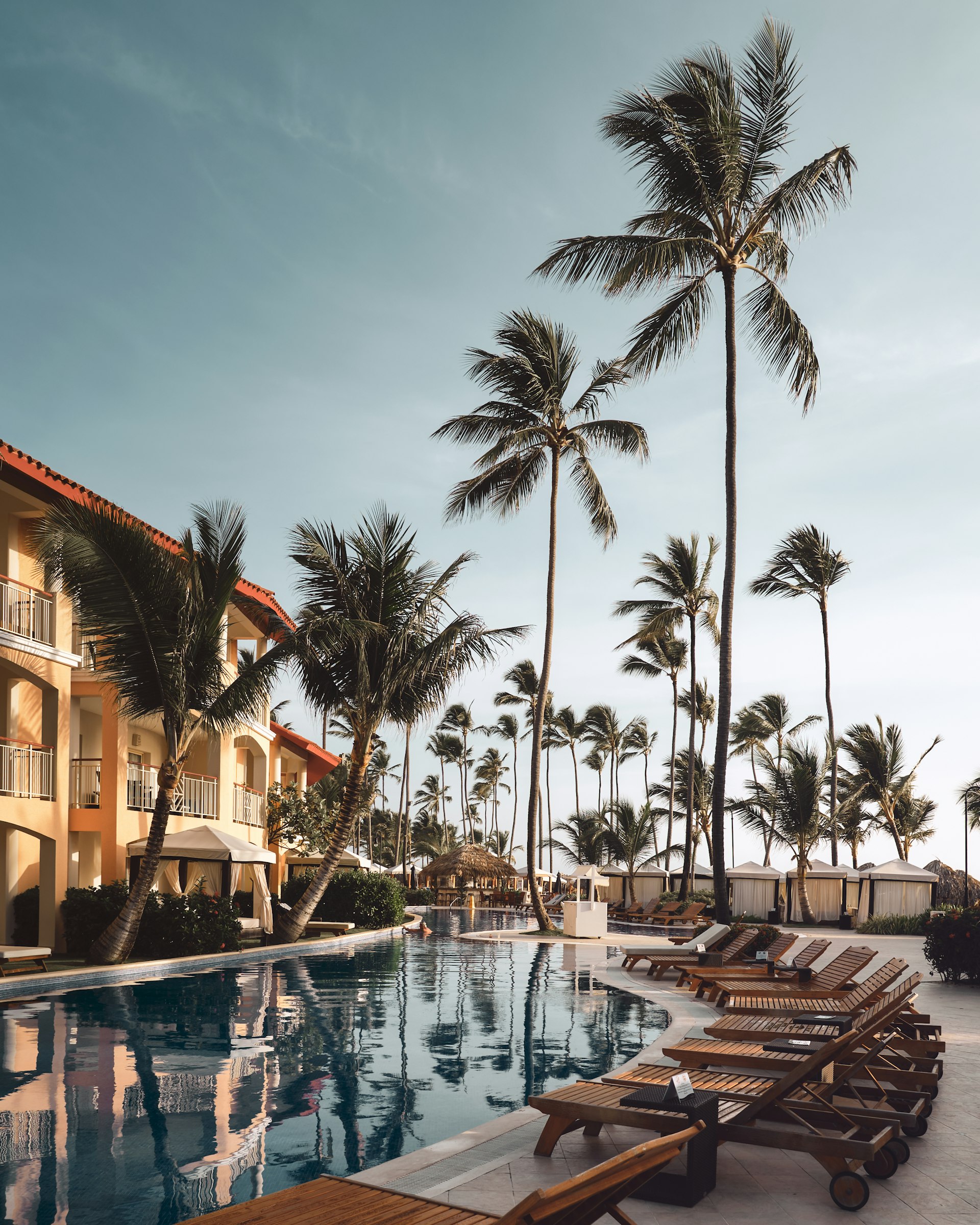
Miami's newest hotel marketing tactic isn't a one-night pop-up — it's a Tuesday. Across the city this quarter, hotels are trading splashy, one-off activations for recurring, dated programming: a weekly cocktail hour, a Saturday vinyl set, a standing aperitivo hour. It's a small shift in scheduling with a much larger shift in strategy, and it's reshaping what experiential marketing for hotels actually looks like heading into 2026.
The short version: guests are proving more loyal to rituals than to rooms. When JW Marriott Miami Turnberry Resort & Spa rolled out four new named, recurring experiences this quarter, it wasn't chasing one viral moment — it was building four separate reasons for a guest, or a local, to come back on a predictable schedule. That's the core of the current playbook, and it's spreading fast through South Florida hospitality: experiential marketing for hotels is moving away from the one-off stunt and toward owned, repeatable programming that guests can plan around and creators can return to.
What Counts as Experiential Marketing for Hotels Right Now?
For most of the last decade, "experiential marketing" in hospitality meant an event: a launch party, a pool takeover, a single weekend pop-up timed to a press cycle. Those still happen, and they still work as awareness plays. But the properties getting the most consistent return in 2026 are pairing those moments with something less flashy and more durable — standing, dated programming that lives on the calendar every week rather than once a quarter.
The distinction matters commercially. A pop-up generates a spike: strong content for a week, then silence until the next campaign. A recurring series generates a habit — for guests, for locals who aren't even staying at the property, and for content creators who know exactly when the next photogenic moment is happening. That habit is what turns an activation into a revenue channel instead of a marketing expense.
Miami Hotels Are Building Weekly Rituals Instead of One-Off Pop-Ups
According to the Greater Miami Convention & Visitors Bureau's "What's New in Greater Miami and Miami Beach" report, published August 14, 2026, several major South Florida properties are leaning hard into recurring, named programming this quarter rather than one-off spectacle.
JW Marriott Miami Turnberry Resort & Spa's Four New Signature Series
The Aventura resort launched four distinct recurring experiences in the same news cycle: Cascata Sunset Sips, a weekly Saturday cocktail series overlooking the property's signature water feature; Off the Record, a live vinyl DJ experience; Spritz at SOFF'S, an Italian-inspired aperitivo hour; and The Listening Room, an intimate live-music series spotlighting local musicians. None of these is a one-time launch event. Each is designed to repeat on a fixed cadence, which means the property now has four standing content opportunities a month instead of one campaign a quarter — and four standing reasons for a repeat guest, a wedding block, or a local diner to come back.
Royal Palm South Beach Reopens as a $100 Million Statement
Royal Palm South Beach reopened in July 2026 following a renovation north of $100 million, returning one of Miami Beach's art deco landmarks to the market as Marriott's flagship Tribute Portfolio Resort. The 404-room property now includes redesigned rooms and suites, new culinary concepts, restored historic architectural details, direct beach access and 18,000 square feet of indoor and outdoor event space. A renovation of that scale is itself a marketing asset — but the properties that get the most mileage out of a relaunch are the ones that follow it with ongoing programming rather than treating the reopening as the whole campaign.
InterContinental Miami's Rocco Turns a Concierge Into Content
Smaller and stranger, but instructive: InterContinental Miami introduced Rocco, a virtual canine concierge that recommends dog-friendly parks, restaurants, attractions and walking routes around downtown Miami, with an elevated in-room dining menu for dogs planned later this year. It's a low-cost, high-personality touch that's inherently shareable — the kind of detail that gets photographed and posted without any paid media behind it, because it's genuinely useful and a little bit funny.
We've seen the same principle play out in our own client work. In an activation with Beau Monde at Fontainebleau Miami Beach, the single most resonant piece of programming across a six-month partnership wasn't a class at all — it was a full-moon sound bath tied to a specific date on the calendar. People post about things that feel like an occasion, and an occasion is a lot easier to manufacture when it repeats on a schedule than when it's a one-time event competing for attention against everything else happening that weekend.
Why Recurring Experiences Are Outperforming One-Off Activations
The behavioral logic behind this shift now has real numbers behind it. A 2025 Deloitte survey of 4,200 hotel loyalty members, cited in a February 2026 hotel-loyalty analysis by hospitality-tech firm BookingWhizz, found that 58% of respondents would rather receive a unique local experience — a cooking class, a guided cultural tour, an exclusive dining event — than a free night of equivalent cost, a preference most pronounced among travelers aged 28 to 45.
The same analysis found that hotels adopting two or more current loyalty strategies, including experiential rewards, saw an average 23% increase in loyalty-program-attributed revenue over the prior year. That's not a soft brand-awareness metric. It's a direct line from "we built a recurring experience" to "guests booked again because of it."
There's a simple reason independent and boutique properties can compete with much larger chains here: a national loyalty program has to standardize its rewards across hundreds of locations, which pushes it toward generic perks like point multipliers. A single Miami hotel can build a recurring experience around what's actually distinctive about its neighborhood, its chef, or its view — the kind of specificity that's much harder to fake and much easier to market.
What This Means for Wellness and Lifestyle Brands Beyond Hotels
The same logic is already showing up outside hospitality. Miami's citywide Spa Month promotion works for the same structural reason JW Marriott Turnberry's new series does: it gives a wellness brand a dated, recurring reason to be top of mind rather than a single campaign moment that fades once the press release cycle ends. Brands that partner with hospitality properties on named, repeating experiences — the way the Ritz-Carlton and MERIT Beauty partnership paired a beauty brand with an ongoing guest touchpoint rather than a single sponsored post — get a similar compounding benefit: every recurrence is a new content opportunity, a new booking trigger and a new data point on what's actually working.
Lifestyle and wellness brands without a hotel partner can borrow the same structure directly: a monthly members' dinner, a weekly class with a rotating instructor, a standing "first Thursday" event. The channel doesn't have to be a hotel lobby. The mechanic — the same time, the same place, every week or every month, always slightly different content — is what's transferable.
How to Build a Recurring Experiential Program Without Overcomplicating It
The properties and brands getting this right share a few habits, regardless of budget:
- Name it. "Cascata Sunset Sips" is a proper noun with a personality. "Saturday happy hour" is a line item. A named series is what people screenshot, tag and ask their friends whether they've been.
- Fix the cadence before you fix the content. Decide it happens every Saturday, or the first Thursday of the month, before deciding exactly what happens. The schedule is the marketing asset; the content is what fills it.
- Start with three to five experiences, not fifteen. Experiential rewards and recurring series carry real operational overhead — staffing, partner coordination, quality control. A small, well-run rotation beats a sprawling one that's inconsistent by the third occurrence.
- Measure it like a channel, not a stunt. Track attendance, organic content produced and repeat-booking or repeat-visit rate per series, the same way a large-scale campus activation gets measured against real engagement numbers rather than raw impressions.
- Let the smallest detail carry the personality. Rocco the virtual dog concierge costs far less to build than a full renovation, and it's more likely to get organically posted, because it's specific and a little unexpected rather than generically luxurious.
Brands weighing whether to build this kind of programming in-house or bring in outside help on strategy, content and measurement can see how that work comes together in our services for hospitality, wellness and lifestyle brands.
Frequently Asked Questions
What is experiential marketing for hotels?
Experiential marketing for hotels is the practice of designing live, in-person moments — events, activations, recurring programming — that give guests and locals a direct, shareable experience with the brand, rather than relying solely on advertising or traditional PR to communicate it.
Why are hotels moving away from one-off pop-up activations?
One-off activations generate a short spike of attention that fades once the event ends. Recurring, named programming — a weekly series rather than a single event — builds a habit among guests and locals, creates ongoing content opportunities, and gives properties a repeatable reason for guests to return, which shows up directly in loyalty and rebooking data.
How much do experiential loyalty rewards cost hotels to run?
Costs vary widely by scale, but hospitality-tech analysis from BookingWhizz notes that experiential rewards typically carry a two-to-three-times perceived-value-to-cost ratio compared with straight cash discounts, meaning a relatively low-cost experience — a kitchen tour, a sunrise class, a curated local itinerary — is often perceived by guests as worth several times what it cost the property to deliver.
Do independent or boutique hotels benefit more than big chains from this approach?
Independent and boutique properties often have an advantage here because they can build experiences around what's genuinely distinctive about their location, chef or neighborhood, rather than standardizing a reward across hundreds of properties the way a national loyalty program has to. That specificity tends to perform better in organic content and word of mouth.
Featured image concept: A wide shot of JW Marriott Miami Turnberry's "Cascata Sunset Sips" series in progress — guests gathered poolside at golden hour with the resort's water feature and a bartender mid-pour in the foreground, capturing the recurring, ritual-like feel of the series rather than a staged, empty-room hotel shot. Alt text: "Guests gather poolside at golden hour for JW Marriott Miami Turnberry's weekly Cascata Sunset Sips cocktail series, with the resort's signature water feature in the background."
Miami's hotels are proving that the most durable experiential marketing isn't the biggest single moment a property can buy — it's the smallest ritual it can repeat well. For hospitality, wellness and lifestyle brands trying to build the same kind of recurring, content-generating programming, One Media Society is a Miami-based marketing agency that helps founder-led hospitality and wellness brands turn one good idea into a series worth coming back for. If you're building something similar, tell us what you're working on.